Website design for artists
I design and build websites for artists and painters across the UK, Europe and beyond. Portfolios and archives where every work is shown exactly as it was made, and the story behind it is easy to follow.
A curator, a gallery or a collector usually arrives at an artist’s website with one question: is this work for me? They don’t need effects. They need to see the work clearly, understand who made it, and find an easy way to get in touch.
That is what artist website design is for. Not decoration around the paintings, but a quiet structure that lets each one be seen properly, and a story that explains the practice behind them.
Why most artist websites get it wrong
Templates are built for content that can be cut to fit. Paintings can’t. A typical portfolio theme crops every work into a square so the grid looks tidy, compresses the colours, and shuffles the order to fill the rows.
The result is a website that looks neat and shows the work badly. A tall canvas loses its top and bottom. A series made to be read in order turns into a random wall of thumbnails. The site ends up more visible than the art.
The rule I start with: never change the work
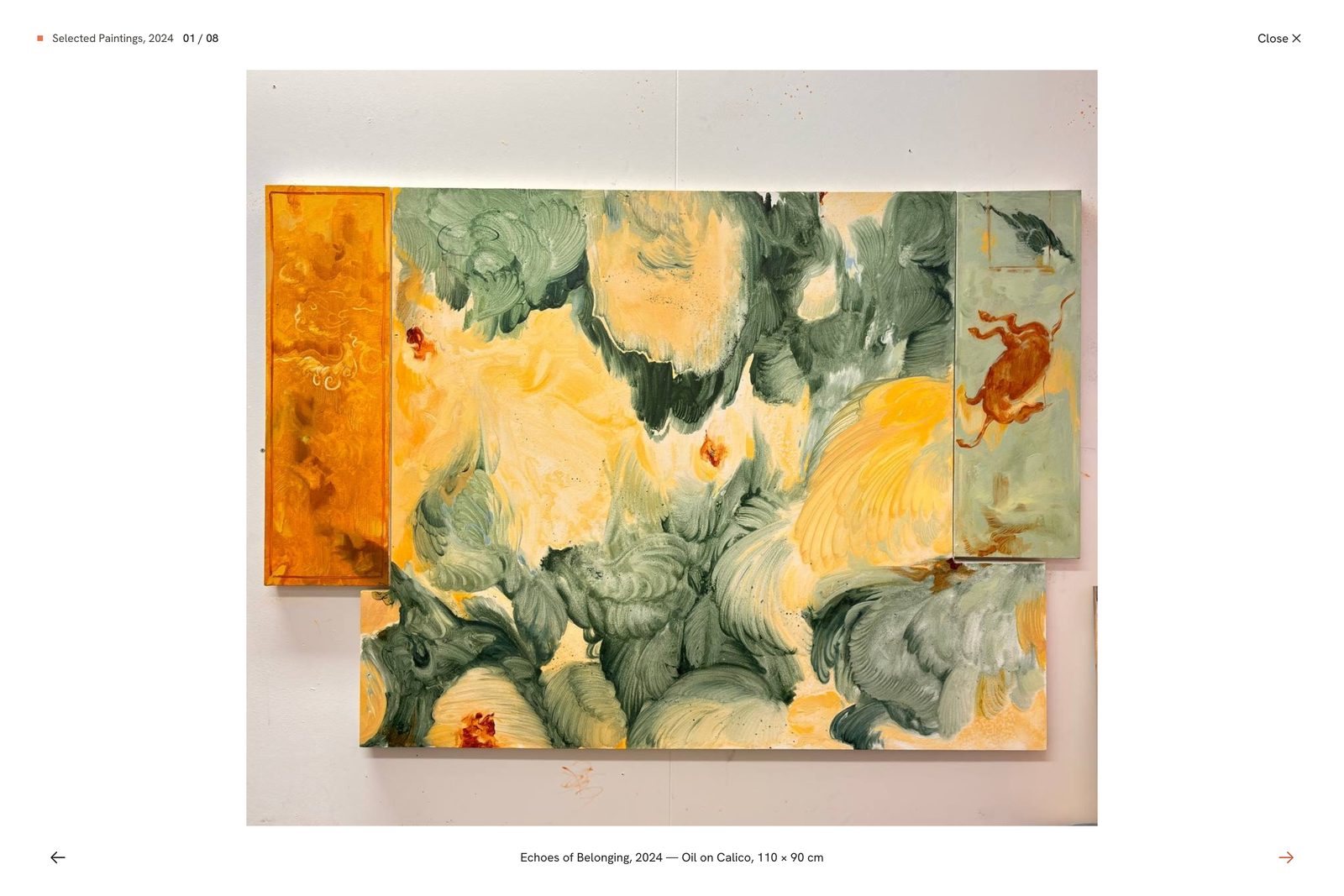
For Yasaman Mollasalehi’s portfolio, we wrote one rule before designing anything: no artwork is cropped, recoloured or reordered. Her archive holds 8 drawings and 34 paintings made between 2018 and 2026, and every one of them keeps its original proportions and its place in the archive.
That rule shaped everything else. The gallery runs vertically and is led by scrolling. Each work fills the view with its title, technique and year. The only accent colour is a soft orange used for numbers and markers, so it never competes with the paintings. I wrote about the details in Showing 42 works without cropping one.
What an artist website includes
Every practice is different, but most of the artist sites I make share the same foundations:
- A story first: who you are, what the work is about, and how a visitor should move through it.
- A gallery built around your practice, by series, year, medium or exhibition.
- Every work shown uncropped, with its title, technique, size and year where you have them.
- An About page with your biography and CV, written to be read, not skimmed past.
- A contact form that really sends email, so enquiries reach you.
- Fast pages that work on a phone, where most people will see your work first.
- The search basics done properly: page titles, descriptions and image text that help people find you by name.
If you would rather build it yourself, I have written a complete guide to building an artist website: platforms and prices, photographing the work, the pages you need and a launch checklist.
Exhibitions and gallery shows
Some artists need more than a portfolio. North by North West was an online exhibition for two painters, Rebecca Wallace and Pip Seymour, represented by Foxcote Gallery. I designed it as two rooms, one for each artist, with 38 works shown fullscreen. Visitors move through them with a swipe, the keyboard or the on-screen buttons, the way you would walk through a gallery.
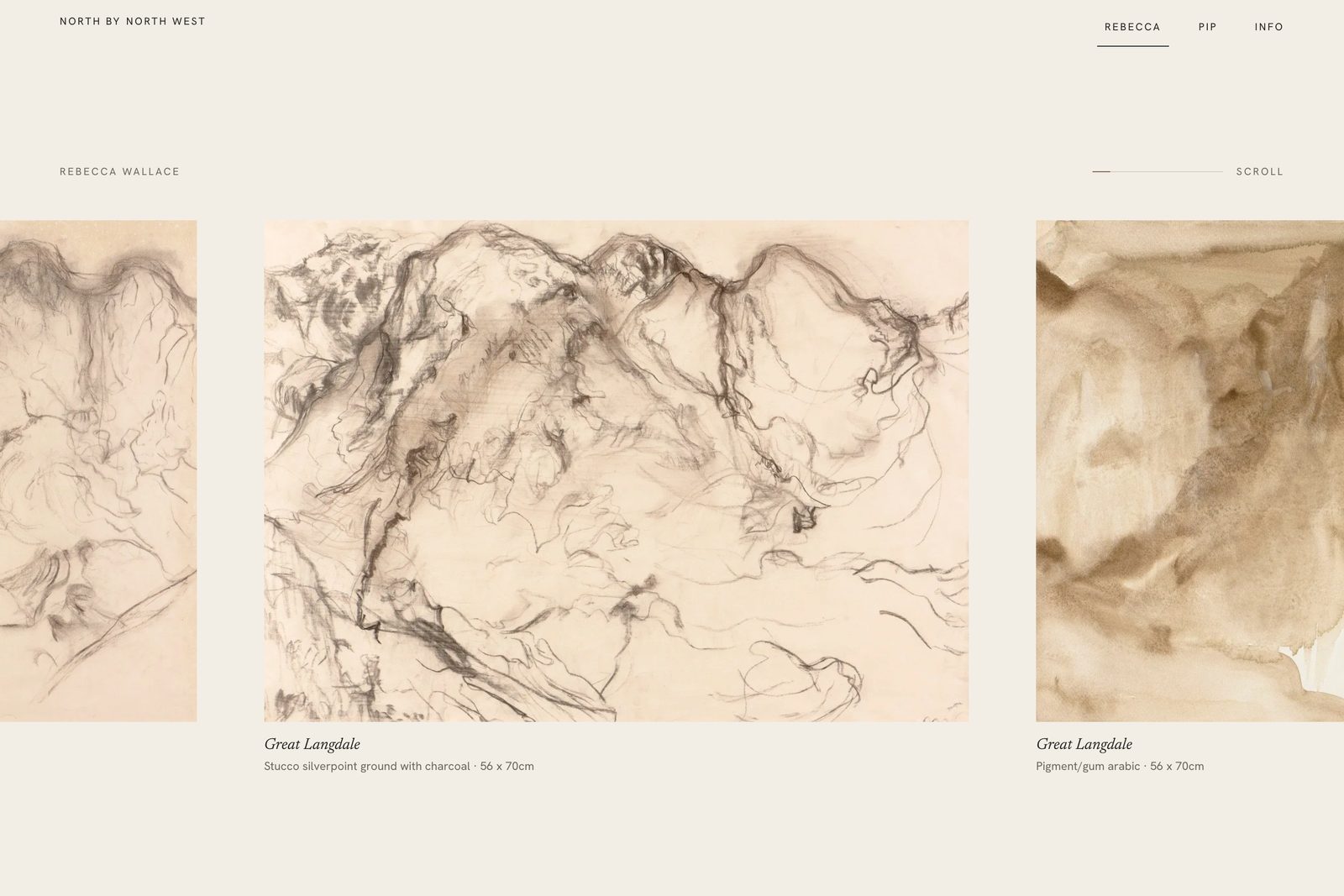 Room I of North by North West: Rebecca Wallace’s works, hung side by side.
If you are preparing a show, a launch or a new body of work with a gallery, an exhibition site like this can sit alongside your main portfolio, or become part of it.
How a project runs
Every project starts with a conversation, not a price list. We talk about your work, who you want to reach and what the site needs to do.
Then come three steps. Story, usually about a week, where I shape the structure and the words. Design, two to three weeks with two rounds of revisions. Build and launch, two to four weeks. Most artist websites take five to eight weeks from the first email to launch.
I design and build every site myself, so nothing gets lost between the idea and the code.
Hand-built or on WordPress
Yasaman’s site is hand-built in HTML, CSS and JavaScript. That gave full control over how each work is shown, down to the exact space around a canvas.
If you would rather add new work yourself, I can build the site on WordPress instead, with simple fields for each piece. Both can follow the same rule: the work comes first. We decide which suits you in the first conversation.
The work
Questions
How much does an artist website cost?
I don’t publish prices, because the cost depends on how many works, series and pages you need, and whether you want to update the site yourself. Tell me about your practice and I’ll send a clear quote after our first conversation.
Will my paintings be cropped or recoloured?
No. Every work keeps its original proportions and colours, and stays in the order you choose. The layout adapts to the work, never the other way round.
Can I add new work myself?
Yes, if we build the site on WordPress. Adding a new series then means uploading the images and filling in the title, technique, size and year. A hand-built site gives more control over how each work is shown, but changes go through me. We choose together at the start.
Do you work with artists outside the UK?
Yes. Most of my artist clients so far are in the UK, and I work with artists across Europe and beyond. Everything happens remotely, by email and video call.
How long does an artist website take?
Most projects take five to eight weeks from the first conversation to launch. A small portfolio can be quicker; a large archive or an exhibition site can take longer.